
«The journey to the core of the human heart is precisely what we call ‘deep,’ and it is this depth that gives visible form to the invisible»
F. Caroli, Anime e volti: l’arte dalla psicologia alla psicoanalisi
(Souls and Faces: Art from Psychology to Psychoanalysis)
The only Italian edition Anime e volti: l’arte dalla psicologia alla psicoanalisi (Souls and Faces: Art from Psychology to Psychoanalysis) of art historian and art critic Flavio Caroli treats as topic the concept of the “Deep” in visual arts, by integrating studies on physiognomy from the 1990s onward. It primarily focuses on the history of physiognomy and its profound influence on five centuries of painting, beginning with Leonardo da Vinci. This theme was visually represented in the exhibition: Soul and Face. Portrait and Physiognomy from Leonardo to Bacon (Milan, Palazzo Reale, 1998-1999).
The art critic Caroli, who has dedicated over 30 years to researching the topic of physiognomy in arts, has consistently woven this subject into his academic works throughout his career. The 90s version of the book which is the Storia della fisiognomica: arte e psicologia da Leonardo a Freud[1] (History of Physiognomy: Art and Psychology from Leonardo to Freud), deals essentially with the theoretical side of research on the topic of Physiognomy, whilst in Anime e volti: l’arte dalla psicologia alla psicoanalisi (Souls and Faces: Art From Psychology to Psychoanalysis) are collected, in chronological order, the texts dedicated to the artists most brilliantly involved in the introspective line of Western art, in Caroli’s definition: «we enter to the living body of the artistic creation» (p. 30).
The central argument of the book is that the evolution of modern psychoanalytical thought and its profound connection with art, especially painting, started from Leonardo since his focus on the soul not only changed the course of the history of painting, but also anticipated key themes central to psychoanalysis. In this context, according to the author, psychoanalytical art, in its embryonic form, began to take shape in the 1500s art, as it is hard to trace its roots back to the 1400s. The evolution of Western art is argued to be unique in exploration of a profound, psychological, and introspective dimension, when is contrasted with other artistic traditions worldwide, which have followed different aesthetic and conceptual paths as transcendent, spiritualistic, nonfigurative, iconoclastic, decorative etc. The key idea here is that Western art, unlike these other traditions, has been deeply intertwined with the study of facial expressions and human emotions that is the wisdom known as Physiognomy and Psychology in modern sense. The author suggests in this regard that this trajectory is, in his words: «the backbone and destiny» of Western figurative culture.
The author ties the modern understanding of “madness” to its emergence during the Renaissance. At this time, madness was perceived as part of the “psychic obscure” which is the darker, hidden aspects of the human psyche. Leonardesque thought of physiognomy is positioned as a key part of this exploration. Leonardo is considered here as a pioneer who, through his studies of the human form and physiognomy, explored the deep, unconscious aspects of human nature, long before Freud. His art is viewed not as a precursor to the psychological exploration of the human mind, suggesting that there is a preconscious realm, an inner force or “psychic thing” that precedes conscious thought and it guides human actions and visually shapes the physiognomic traits that reflect psychic drives. In the author’s words: «the first window into the soul, revealed through the face, is placed on heart. At the end of its journey to the core of the human heart, this exploration arrives at a shapeless cave, a metaphorical space where all forms are possible» (p. 15). Right here, Lorenzo Lotto, whose work is described as poetic in its exploration of the human interiority, focusing not just on the external appearance but on the complexities of the human psyche, is praised for his deep psychological understanding expressed through painting[2].
Leonardo’s pioneering approach to understanding human expression and the inner workings of the psyche, set in motion in a five-century-long journey in art toward exploring the “Deep”, is tied to the Islamic filter on the Western “thought in figure”, as Pseudo-Aristotelian Sirr al-asrār, also known by its Latin title Secretum secretorum, a 10th century Arabic compilation of Classical Greek, Byzantine, Sassanid, written to Alexander the Great. Another mention is The Liber Almansorum (Liber medicinalis ad Almansorem regem); a medical treatise in ten books, translated into Latin by Gerard of Cremona (d. 1187). Dating back to the early 13th century and later translated into Florentine around 1325, it holds the distinction of being the first Italian medical encyclopedia. Liber Physionomiae by Michael Scotus, astrologer and magician to Frederick II, is based on these two sources, while the Sirr-al-Asrar is found in the Secreta of Albertus Magnus.
The Liber Secretorum of Albertus Magnus, published in Bologna in 1478, was probably known by Leonardo, who refers to it with the note “secrets of Albertus Magnus”, written in his richordo de libri, where is placed a strong emphasis on translation, transmission, and interaction of multidisciplinary sciences from hand to hand, as is well known, the pioneer in representing this tradition in art is Leonardo, renowned for his profound interest in artistic creation and anatomical study.
In the Middle Ages, the physiognomy of classical tradition was approached by artists, especially sculptors. Statuary explores the nature of the soul within the body, ranging from the vile to the courtly, and from the holy to representations of devils and angels. This symbolic vocabulary offers a well-defined series of variations in both face and form.
Michael Scotus, Albertus Magnus and Rhazes are not unknown to Pomponio Gaurico in the chapter De Physiognomonia in De sculptura, Florence 1504. All this interaction contributed definitively to the theoretical resumption of Physiognomy in all branches of the multidisciplinary sciences. Souls and Faces reflects on Aristotelianism wondering if the eternal part of the soul, against to bestial instincts, is unique for all men and is apparently separated in bodies and suggests St. Thomas Aquinas’ principium individuationis a concept later handled by Carl Gustav Jung, that puts the soul in an individual and irreplaceable position in all aspects.
A prominent topic during the Renaissance was the interiority of man and the dark powers he possessed. Although the work of painters was not directly connected to medical research, the study of these themes evolved into a distinct discipline rooted in Physiognomy and the Physiology of the face. This discipline sought to visually represent the soul’s movements.
The chapter dedicated to the Shadow Line of Lombard Art following Leonardesque, thought highlights the crucial role that Lombard art, particularly its “shadow line”, played in shaping European art history. The passage opens by emphasizing the foundational influence of Leonardo da Vinci, particularly his studies conducted in Lombardy, on the development of art. Leonardo’s work is seen as a cornerstone for the evolution of the artistic tradition in this region. From Leonardo’s studies, the influence of Lombard art spreads across several key phases in European art history.
Sofonisba Anguissola, a sixteenth-century portraitist, is highlighted for her contributions, particularly for her role in advancing the study of human expression (p. 86).
The reference to Fede Galizia suggests a deepening of the exploration of psychological states, summed up by the term «object-state of mind» (p. 135). This could relate to how objects, in portraits for example, are not just representations of reality but also expressions of inner psychological or emotional states. The line then moves through Caravaggio, who brought a revolutionary maturity to the visual language of art with his intense realism and dramatic use of light and shadow (p. 150). The progression continues with Ceruti and Galgario, who carried forward the traditions and innovations of the earlier phases. The mention of Bazzani highlights the pre-Romantic experiments, suggesting that Lombard art was ahead of its time in anticipating later movements like Romanticism (p. 163). The passage also notes that figures like Faruffini and Ranzoni, whose work is often considered provincial or eccentric, contributed to this tradition before the forceful re-emergence of Umberto Boccioni, a key figure in the Futurist movement.
Throughout the chapters, we encounter the intellectual journey from philosophical treatises on human experience to the emergence of modern psychology and psychoanalysis, with a focus on how our understanding of the “deep” became central to contemporary thought (p. 237). In this context, the exploration of the human mind, beginning with figures like Leonardo and extending through the Rationalism of the 17th century to the 18th century philosophy of Sensism, which focused on sensory experience and perception as the foundation of knowledge, shapes both the evolution of psychology and the artistic portrayal of human inner complexity. The romantic thought is underlined in individuality and exploration of the inner self, which is presented as a key phase in psychological thought later formalized as deep self. The “deep” thus refers to the psychological exploration of the unconscious, a theme that became central to both art and psychology in the centuries that followed.
The final chapter explores the intersection of word, image, art, and psychoanalysis in the contemporary world. Psychoanalysis, with its various schools, has revealed that creative processes and imagination stem from the associative mechanisms of the unconscious mind. The passage argues that much of 20th century art is structurally based on writing, highlighting the importance of language and its connection to human subjectivity, as defined by Lacan and Freud. It suggests that both word and image, as central elements of contemporary creativity, share similar modes of expression and depth, especially in relation to art traditions.
Last of all, the central argument is that Western art, beginning with Leonardo da Vinci, has taken a unique and inimitable journey toward the exploration of the “Depth” of human existence that sets it apart from other artistic traditions. The author suggests that the journey of Western art is not just about visual representation but is part of a broader philosophical investigation into human existence constantly posing new questions in other to explore the depths of the human soul.
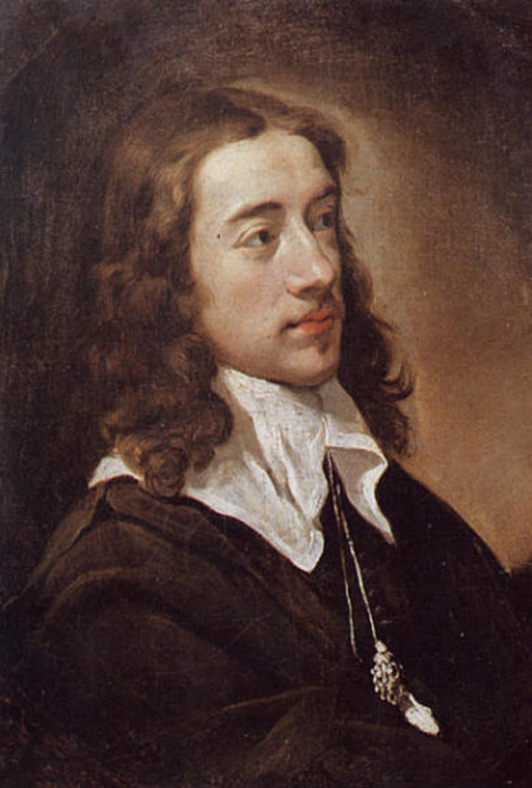
Charles Le Brun, Louis Testelin (1650), Louvre
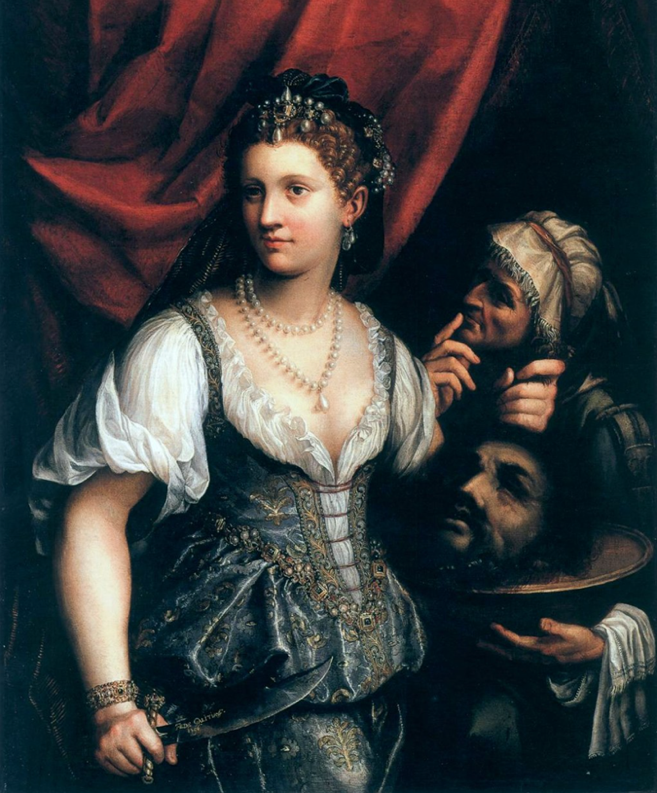
Fede Galiliza, Giuditta con la testa di Oloferne (1596), Ringling Museum of Art
- Milano, Leonardo Editore, 1995; II ed. Milano, Electa, 2002; III ed. Milano, Electa, 2012. ↑
- F. Caroli, Lorenzo Lotto, e la nascita della psicologia moderna, Milano, Gruppo Editoriale Fabbri, 1980. ↑
(fasc. 56, 15 settembre 2025)